A different summer

A different summer

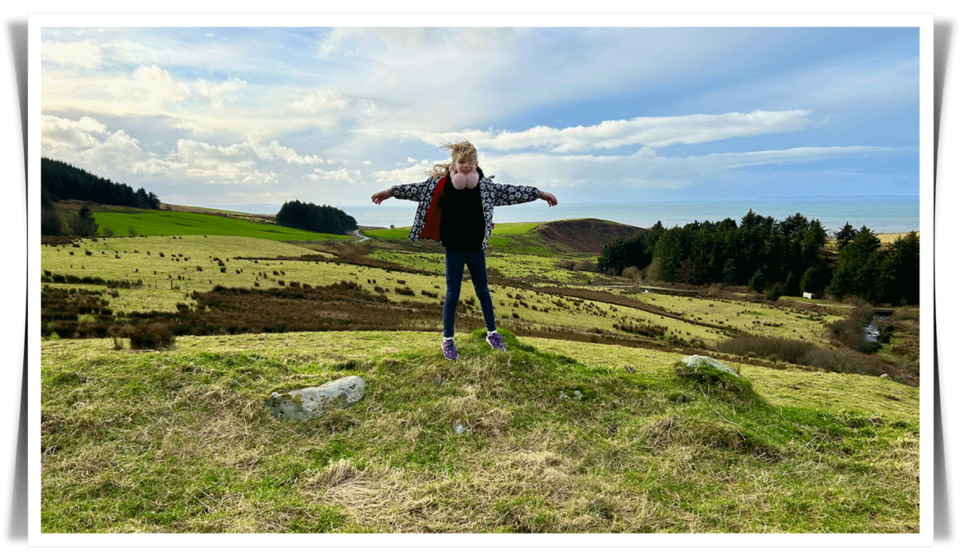
When I wrote about new beginnings in July, I thought summer would bring with it an opportunity to explore parts of the peninsula I hadn’t visited before. I had grand hiking plans: I’d follow Clachaig Water to the long-abandoned farmstead of Achahoirk just to see if I could make it without sinking into a bog, for example, or head up into the middle of Kintyre, beyond the forestry land, to view Arran from the summit of the highest point. 

It was a Saturday, cool and overcast, when I made my pledge to write again. I explained where I’d been, what I’d done, and why I’d returned, ice floes on a lake, life shifting. Just a little earlier that day, my youngest daughter, Juliette, had complained of an earache while getting herself a glass of milk in the kitchen. “Oh, dear,” I thought. “That’s typical — an ear infection at the weekend.”

Fewer than four days later, I’d be more than a hundred miles away by road in a private room, staring at an empty hospital bed.

Instincts and liminal spaces

“Trust your instincts,” they say. “They won’t let you down.”

Unfortunately, that doesn’t mean other people will take your word for it when they’re told something’s seriously wrong with your child. 

Juliette woke up on Sunday the 5th of July with a splitting headache. That, in itself, was unusual. She isn’t prone to headaches, even when ill. After being sick a couple of times, she managed a little bit of lunch — but her ear hurt, and she had quite a high fever. 

I began alternating ibuprofen and paracetamol, but the headache never really went away. About 10.00 o’clock that evening, the area behind her left ear felt tender to the touch and maybe a little pink, but not swollen, and I thought seriously about taking her to A&E rather than waiting until morning for the doctor. In the back of my mind, I wondered if she’d developed mastoiditis — but she felt tired, and I suspected we’d be dismissed after an hours-long wait with instructions to keep giving her medicine. “Most ear infections are viral,” they usually say, “and will burn themselves out in three days.”

On Monday, her headache continued. She sat, quiet and pale, on the sofa, drinking vast amounts of water but eating almost nothing. I watched her, worrying.

We went to the doctor. “She has an earache and an intractable headache,” I explained, sweeping her hair back with my fingers, “and she says this area, right behind her ear, hurts when I touch it.” I told him she’d been sick the previous day, and that she’d had a fever since Saturday.

The doctor frowned, peered at the place I’d pointed out, and used an otoscope to look into her ear.

“I can’t see the eardrum,” he said. “Her ear canal is full of wax.” He explained that wax could cause pain, but that the NHS didn’t syringe ears anymore. Apparently I could take her to the nearest larger town and get it done privately there, but it would cost in the region of £70.

“Does ear wax cause a temperature of 39.5ºC?” I asked, looking pointedly at the doctor.

“Well, no,” he replied.

We left with a prescription for wax-softening ear drops and Nystatin for a “coated tongue.” Driving home, I felt helpless and uneasy.

___

That night, Juliette slept in my bed. I wanted her near me because I knew something wasn’t right. 

At about 4.00 o’clock the next morning, she woke up, shaking with fever, and was sick all over the place. I comforted her, changed the sheets, and tucked her back in — but it quickly became clear that she couldn’t stop throwing up, and I began counting the hours. Eight hours, you see, is the threshold at which you’re supposed to seek medical help if you can’t keep anything down.

By 11.20 am, her vomiting had turned from ordinary to projectile. Her head was pounding. “What is this illness?” she shouted, crying. I rang the doctor. After initially suggesting I take her to A&E, they called her into the surgery. 

I threw my iPad and few overnight supplies for us both into my rucksack, and tucked Flopsy — Juliette’s favourite plushie — into the bungee cords on the back. Then, I wrapped Juliette in her dressing gown, picked her up, and carried her to the car. 

This time, we saw a different doctor — a locum from South Yorkshire who took the look of alarm in my eyes very seriously indeed. After examining Juliette, she confirmed that we’d need to go “up the road” to the hospital, and called ahead to brief the children’s emergency department. Having waited hours for an ambulance in April (again, for Juliette — another story for another time), I decided I would drive her over myself.

“Will you be okay? Do you have anyone to go with you?” asked the doctor.

“No — but I’ll be alright. I’ll go straight there,” I replied.

She gave me a hug on the way out. “You scare me,” she said.

The wind felt wild as I carried Juliette through the surgery car park — gusty, hot, as if the weather knew something was afoot. I strapped her into her seat and put a towel over her lap. She looked at me, pallid and impassive. “I love you,” I said, and shut the door.

We passed our home in the village and drove northward along the trunk road. I felt completely alert and aware of how serious the situation had become: I had to get her there as quickly and safely as possible.

There was something else in my mind, though — a creeping sensation I couldn’t shake. I looked back at Juliette in the rear-view mirror, pushing my body up to see her face, and began to wonder if she was dying. She closed her eyes and held on to the moulded pulp bowl we’d been given for the journey from the doctor’s office. Her lips were almost white. The skin on her forehead seemed to fade into her pale blonde hair.

Music suddenly felt important. No longer confident we’d get to the hospital in time, I wanted to play something beautiful for Juliette to make her feel less afraid. We flew along with an album by A Winged Victory for the Sullen on the stereo. By the time we reached Lomondgate, our ambient playlist had melted into Madison Cunningham’s “Life According to Rachael”, and I sang along in resistance to the growing feeling of fear in my chest.

It’s not if, darling, it’s when.
There’s always something left unsaid.
Were your eyes green; were they blue?
What was it that I forgot to ask you?

Standing at the threshold 

It took us about three hours to get from our village to the Royal Hospital for Children in Glasgow. I pulled into the tiny car park next to the maternity unit entrance at about 5.30 pm and found one spot open, right at the back. 

By this time, Juliette was semi-conscious and certainly couldn’t walk, so I put my coat and rucksack on — Flopsy dangling out of her precarious cradle — and wrapped my arms around the dead weight of my daughter, carrying her from the car to the children’s A&E entrance. A nurse caught us as we came through the automatic doors and quickly found a wheelchair.

After taking her temperature (by then well over 40ºC), the nurse gave her some paracetamol to bring her fever down, but it came straight back up again in the waiting room. Thankfully, we were taken to the intake area almost immediately and put behind a curtain. I lifted Juliette from her curled position in the wheelchair, laid her on the bed, and made a blanket of her dressing gown. 

Our little space quickly became a hub of activity. On one side, two nurses took blood, inserted a cannula, administered paracetamol by infusion, put on a blood pressure cuff, and connected an oxygen monitor; on the other, a doctor spoke with me about her symptoms. Nearby, I heard small children crying, speaking, laughing. Meanwhile, Juliette lay still, barely reacting to needles, noises, or any of the various tests they were performing on her little body.

Shortly after 7.00 pm, they pushed four enormous syringes full of fluid into her cannula, followed by a large dose of antibiotics. I sat in a blue plastic chair next to the bed, helping the nurses whenever I could. Juliette’s face had begun to twitch in an odd way. One of the consultants mentioned meningitis and a lumbar puncture, so we rolled her onto her side and applied numbing cream, then a clear patch, to her back.

At about 8.45 pm, her blood test results came back from the lab, her infection markers strongly indicating some kind of bacterial infection. The plan changed: instead of immediately performing a lumbar puncture, the team called radiology and arranged a CT scan. 

The nurses and I carefully changed Juliette into a clean hospital gown, attached leads to her chest and covered her cannula with a soft piece of tubular bandage. Someone brought me a cup of tea and a sandwich. Then, we were alone. 

Something intangible began to change. If you’ve ever been near the veil between this world and the next, you know what it feels like. It’s a threshold — a place where the distance between life and death seems impossibly thin. I could sense her beginning to drift from me.

The rescue

Juliette’s CT scan results were made available just after midnight. The consultant came in and sat on a chair next to me, opened his laptop and pulled up a black-and-white image of her head — a neat section through the mastoid process. He pointed out the healthy, air-filled spaces in the mastoid bone on her right side, and the contrasting lack of air on the left. This, he explained, meant an infection inside the bone.

Then he pointed at something I hadn’t expected: a dark oval shape inside her skull. An abscess. The large blood vessel next to the abscess — the sigmoid sinus — was invisible, maybe because of pressure being put on it by the infection. 

I felt stunned. I told him I’d been expecting meningitis and felt relieved it wasn’t that — but questioned whether or not I should feel any relief at all, given what we were now dealing with.

“This is very serious,” came the gentle response.

ENT got involved next, examining her ear and the area around it, then drawing a purple arrow underneath it. Neurosurgery received the brief as well. The consultant added another antibiotic to her regimen.

At 12.45 am, Juliette’s team began prepping her for surgery. One of the two ENT surgeons brought me papers to sign and explained what would happen: a mastoidectomy, a procedure to drain the abscess (possibly with neurosurgical involvement), and a grommet in her eardrum to relieve pressure in the middle ear. The anaesthesiologist stopped by next — a friendly man whose name was written on his cap. Finally, the ENT consultant spoke with me about the surgical plan and post-surgical hospital stay in more detail. She’d be in for at least a week, they thought.

Just after 2.00 am, we began trundling down the hospital corridors to the operating theatre. Shortly before the half hour, I held her hand as the propofol went in and the mask went over her face. She fell deeply asleep, and they took her through a set of double doors and into surgery. 

I wandered back out of the induction space and into a wide, bright hallway. Two nurses had come with us from the assessment unit; now, they walked with me to the ward Juliette would go to after her operation. 

___
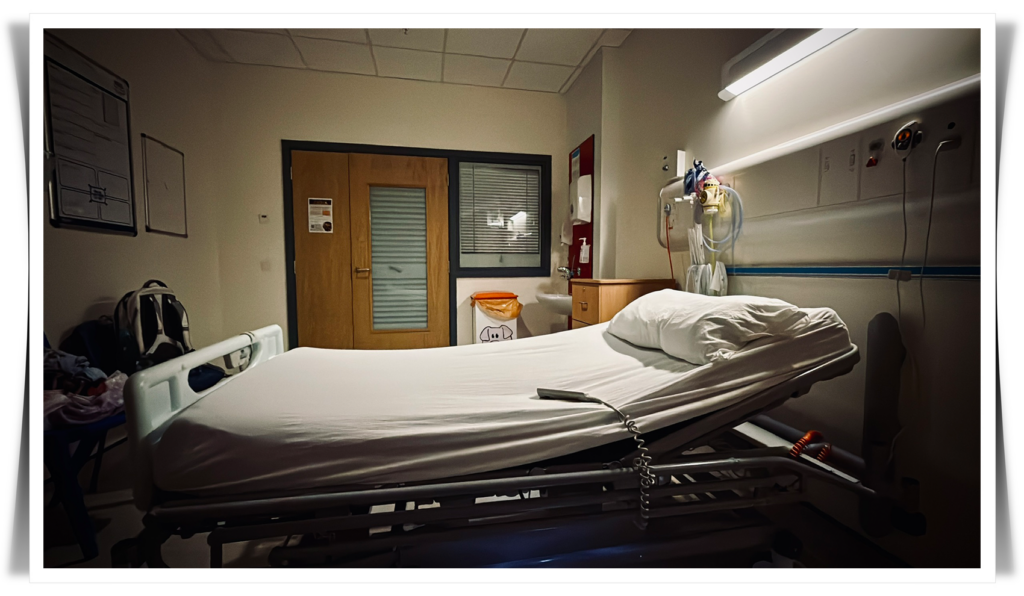
A photograph of an empty hospital bed with the reading light above it switched on.

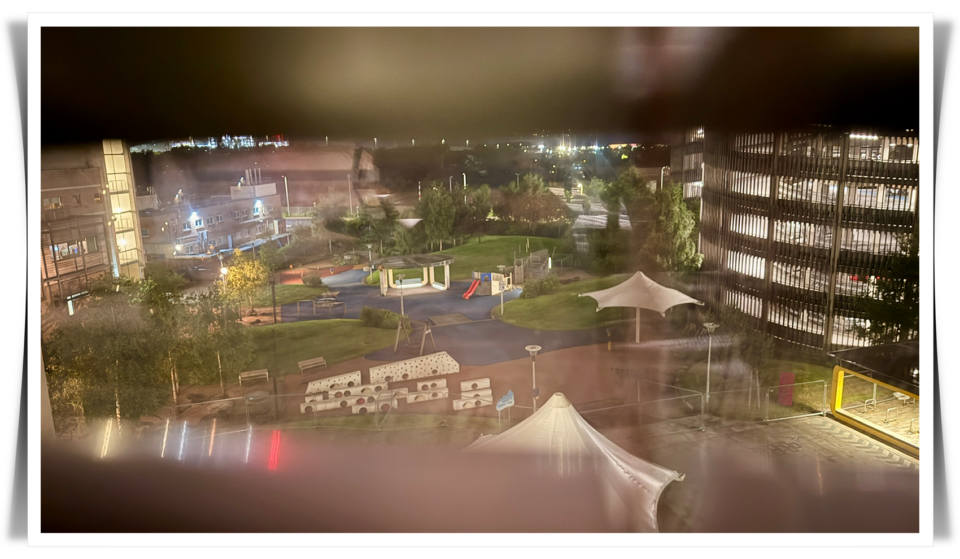
At 2.45 am on Wednesday the 8th of July, I sat down on the edge of the pull-down auxiliary bed in a dimly lit hospital room. Behind me, partially obscured by a set of half-closed blinds, the window gave a view of the campus grounds three floors below. In front of me, another empty bed stood in the middle of the room, head raised, illuminated by a reading light.

Sleep felt impossible. Instead, I sent a round of updates to family members and friends, telling them what was going on. Feeling quite alone, I suddenly wished I’d brought another cuddly toy: Flopsy had gone with Juliette, and rucksacks are much harder to anthropomorphise.

An hour went by, and then another. Initially, the surgical team had estimated 90 minutes, but 4.00 am came and went without a word. I couldn’t help imagining what might be happening in theatre: would they tell me if something had gone wrong? What if her heart had unexpectedly stopped? I leaned forward, elbows on my knees and chin propped against my knuckles, staring at the door. One of the ward nurses brought me a plate of toast with butter and jam, and another cup of tea. 

Finally, at about 5.20 am, there came a knock. The ENT consultant and his colleague walked into the room, still dressed in scrubs. Their faces were bright, and full of relief. She’d done well, they said, and the surgery had gone as planned. They’d removed her mastoid bone, drained roughly twenty millilitres of pus from the abscess inside her skull cavity, and performed a myringotomy with grommet insertion to clear her middle ear. 

There was something else, too. Instead of being compressed, her left sigmoid sinus had been fully thrombosed — completely filled with a septic clot. They’d decided during surgery to perform a thrombectomy to remove as much of the clot as possible, but some had been left behind to avoid damaging the wall of the sinus. With that major drainage channel still occluded, the blood flowing into Juliette’s brain would now drain out primarily via the sinus on the opposite side. Over time, and with the help of blood thinners, they hoped her body would remodel the remaining clot, allowing the blood vessel to recanalise. However, that would probably take several months.

This had been a life-threatening situation, they explained, and the operation had been essential. Now, she was in recovery, and I’d be able to see her soon. 

I could have hugged both of them — but wasn’t sure if that was strictly protocol. Instead, I thanked them wholeheartedly for performing the surgery that had saved Juliette’s life. Words were inadequate, really. I felt more grateful than I could express.

Juliette’s ascent

Juliette arrived on the ward at about 6.30 in the morning. She wore a compression bandage over her left ear, and lay quietly on the bed with her eyes closed. After a few minutes, she began to wake up. By 7.30 am, she started complaining about the itchy bandage and her general situation: it was the most she’d spoken since the morning of the previous day.

We were not yet out of the woods. Her fever continued, and her headache didn’t immediately go away, either. Every few hours, antibiotics went into her midline by IV, and her team kept the painkillers going, including morphine. That afternoon, she went down for an MRI, which frightened her. I sat next to her at the bottom end of the machine and held her hands. At some point, it became obvious that she couldn’t really turn her head left.

Family came to see us that evening, bringing fruit, clothing and other essentials. Afterwards, I tucked her in with a pale blue hospital-issue thermal blanket, then made my way over to the fold-down bed. 

“Mummy, can you lay with me,” said a little voice. And so I did, curling my body carefully around hers. 

Very fortunately, the ward consultant that week was the ENT surgeon who’d performed Juliette’s operation. The next morning, he told us they’d isolated bacteria from Juliette’s bloodstream and were working to find out the serotype: streptococcus pneumoniae. Broadly speaking, the antibiotics she was on would be effective — but they were performing resistance testing to come up with a more targeted treatment. That evening, she unexpectedly developed double vision, prompting an extra visit from the team. 

Another night passed, with the help of Oramorph. The following day, Juliette had her surgical drain removed. Her headache and double vision continued. After some on-the-spot tests, the consultant confirmed a minor sixth nerve palsy and referred her to the ophthalmologist that afternoon. Feeling somewhat uneasy about her ongoing headache, he also ordered another CT scan.

Juliette’s goal, that day, was to walk from her bed to the chair near the door. I held her hand and she made it over, then sat down for a while with a pillow behind her back, looking very solemn.

Time passed slowly. Juliette’s head pain came and went, while her appetite gradually increased. I carefully washed iodine and other surgical leftovers out of her hair with baby wipes while she watched television with one eye closed. In the evenings, we had mother-daughter hot chocolate parties with instant cocoa made in the parents’ room. I walked to Lidl and bought some marshmallows to put on top.

Three days later, her double vision resolved. After that, she wanted to explore, so I popped her in a wheelchair and took her to the playroom — but she stood up and sank to the floor. Abandoning that idea, I rolled her out of the ward and around the hospital atrium, which she named “the big, open space.”

Outside, Glasgow was enveloped in a heatwave. Sunburned hospital visitors wore shorts, and the main lobby began to feel like an enormous tropical palm house. My mum came to visit, and I went to the supermarket while she stayed with Juliette, returning with a summer dress and a pair of sandals. “Look,” I said. “You can wear these when you’re better.”

We began collecting snacks in the hospital kitchen fridge. After the parent’s room ran out of disposable cups and lids, a kindly housekeeper brought me a stash to keep. Feeling rebellious, I bought a real mug and a pair of slippers a few days later: if we were here for the long haul, I would have my creature comforts. 

My dad asked what he could bring. “Things that will tempt a child to eat,” I replied — and he turned up with two carrier bags full of crisps and sweets, which we delightedly poured out all over Juliette’s bed. 

The in-between

For her part, Juliette endured a lot. The anticoagulant injections she had every morning and evening burned, and her headaches were sometimes so bad that we put ice packs on her forehead. She hated the oral metronidazole because it made her feel sick, and found the sensation of the IV antibiotics unsettling. She still couldn’t turn her head left properly, and couldn’t hear out of her left ear. More than anything, she felt frustrated with her body and wanted normality to return. She wanted to run and play with her friends, but couldn’t. 

Nine days after I brought her to A&E, we were able to leave hospital and go to a charity-owned flat nearby, fortunately paid for by NHS Highland. By this time, her team had switched her from injections to oral blood thinners. However, we had to return to the clinical decisions unit every day for antibiotics, so her midline stayed in. I worked remotely, sometimes from the flat, and sometimes from the hospital.

At first, I held her hand firmly everywhere we went. She’d lost weight while ill, had lingering headaches, and felt fragile and unsteady. To build up her strength and confidence a little, we drove to local shopping centres — quite the novelty for a kid raised on Kintyre — and rode up and down the escalators.

One evening, we visited Kelvingrove Park and walked along the river path to the museum. She lay down on the grass behind the big sandstone building, as if absorbing energy from the earth. When we got back to the flat, she went out onto the balcony and started singing to the people passing by. I listened, smiling. She hadn’t lost her spark. 
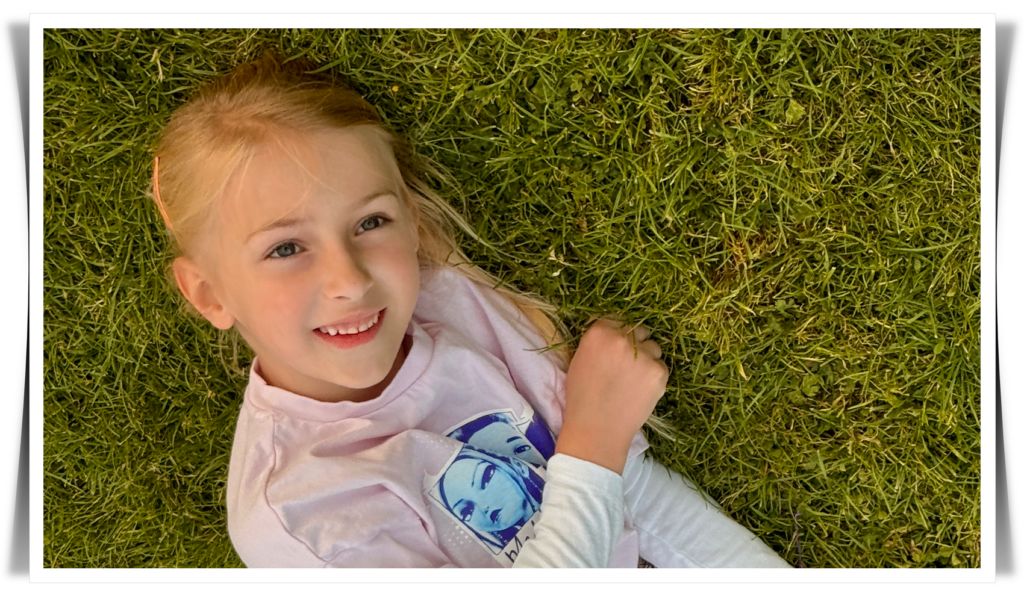
A photograph of a smiling young girl with blonde hair, lying on grass.

Towards the end of July, she had a comprehensive hearing test. We’d hoped, based on the results of a Weber test conducted the day after her surgery, that she would retain the hearing in her left ear. However, she had a significant infection upon admission — including bacteraemia — which had taken a while to bring under control. The delicate structures in her inner ear had been affected after all, and her hearing was totally gone.

The news was sobering, but not a complete shock. Given the seriousness of her illness, it seemed fortunate that this was the only permanent consequence she’d walk away with. She was here, alive, with a future. We could deal with single-sided deafness if she could still run into my bedroom in the morning and give me a cuddle.

We made a plan: CROS hearing aids in the short term, and an Osia implant as soon as possible after that. The Osia would send vibrations through the bones of her skull into the cochlea on the right side; it wouldn’t restore stereo hearing, but it would allow her to hear sounds coming from the left. 

Going home

In the end, we spent almost the whole of July either in hospital or temporarily living in Glasgow. After a final MRI on the 29th, which confirmed that while the clot was still present, it hadn’t moved, Juliette was officially discharged from the “hospital at home” service. The following day, we packed the car full of all the things we’d accumulated and left the city. 

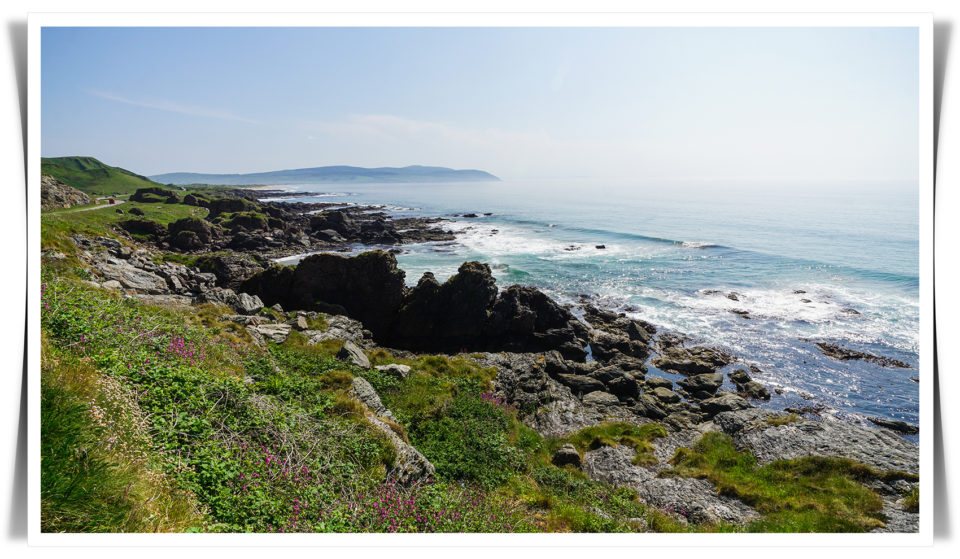
Driving back to Kintyre along the trunk road, I felt completely dazed. By the time we reached the peninsula, the afternoon had turned to evening, and the steep light made the land look especially beautiful. We got caught in the roadworks just north of Kennacraig, and while waiting for the hourly amnesty, I took a photo of the wildflowers outside my window. Juliette sat in the back with sunshine in her eyes, squinting across West Loch Tarbert at the Knapdale coastline. 

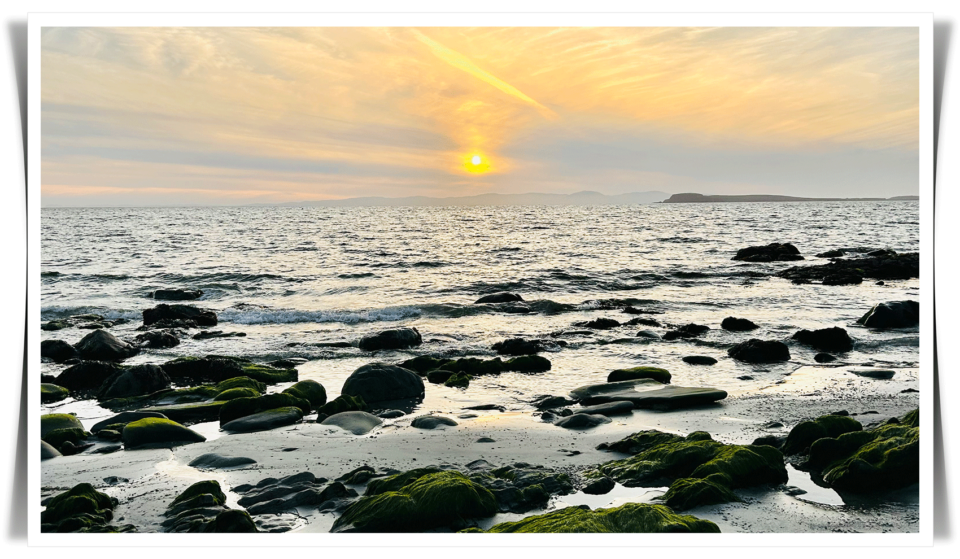
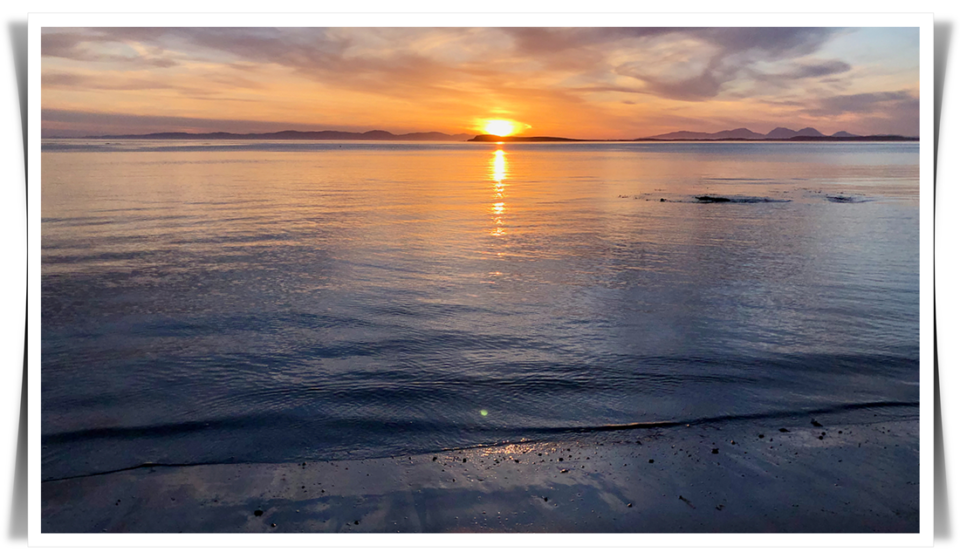
We got home as the sun set behind the island of Cara. There were still medicine bottles sitting out, and a little rice heat pack I’d made for her on the sewing machine to help with her painful ear. The house needed a deep clean, but that would have to wait until morning.

That night, Juliette slept in her own bed, under her own duvet, surrounded by her menagerie of stuffed animals — including, of course, Flopsy. I lit a candle in my own room, and picked up The Odyssey from its spot beside my bed. Before Juliette’s illness, I’d reached the part where Odysseus, disguised as an old man and lodging with his shepherd, revealed himself to his son, Telemachus. Together, they’d made a plan to reclaim the kingdom of Ithaca. He had come home, as we had come home. Now, I had a kingdom of my own to reclaim. 

___

I’m writing these words on October the 3rd, more than two months after the day we arrived home. This post has taken me the better part of two evenings to produce, and it’s probably far too long — but it’s been cathartic. 

Sometimes, I still slip into a thousand-yard stare. I still feel dazed by all of it. I’m still grateful beyond words to the highly responsive and incredibly gifted team at the Royal Hospital for Children, without whom Juliette would not be here. Their prompt actions saved her life, and we are immeasurably indebted to them. They’re also absolutely lovely human beings and a credit to the hospital and to the wider NHS on that account, too. 

Juliette continues to recover, diligently taking her blood thinners every morning and evening — and avoiding trampolines, just to be on the safe side. She’ll have a follow-up MRI later this month to see what’s going on with the clot. At some point, we’ll start making plans for her Osia surgery. In the meanwhile, life, thankfully, goes on.

___

If you’d like to help support the Royal Hospital for Children, you can fundraise, volunteer, or donate to the Glasgow Children’s Hospital Charity online.
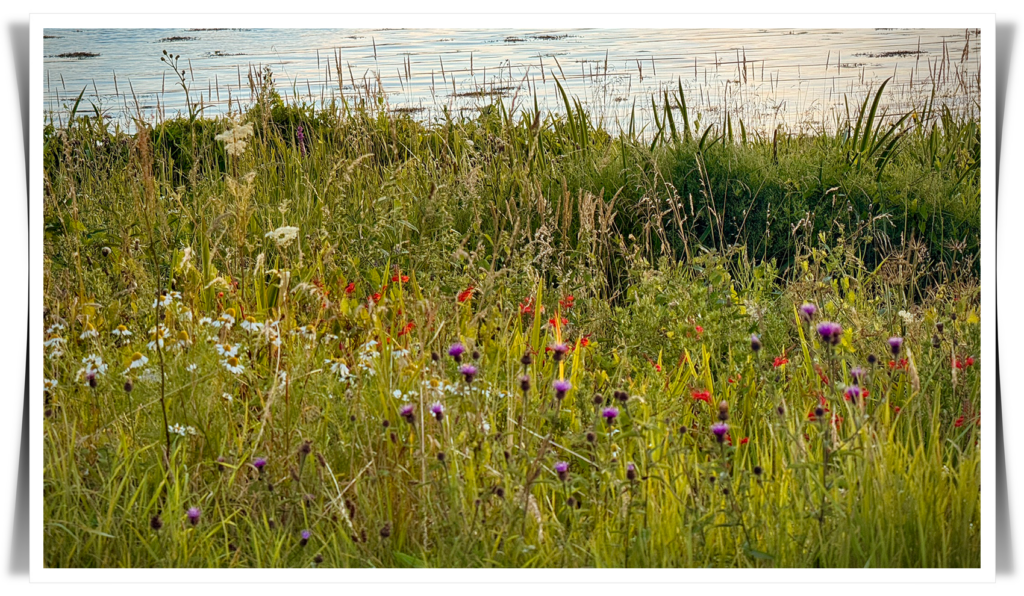
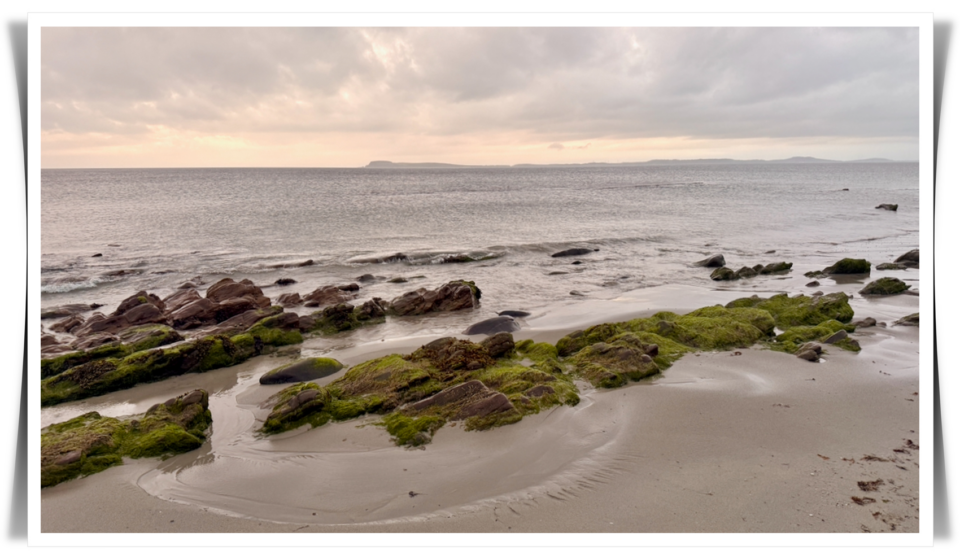
Wildflowers and grass in the foreground, with water in the background.

A new beginning

A new beginning

The weather lately has been drivellous. There. I’ve invented a word for it — because frankly, “dreich” doesn’t cut what we’ve had to endure recently. 

With the exception of one glorious weekend when I felt really ill (rare for me this year), we haven’t had any reliable blocks of solid sunshine since May. It’s now July the 4th, and tomorrow’s forecast is overcast and drizzly. So is Monday’s, and so is Tuesday’s…and then, if we’re lucky, we’ll see a break in the cloud for a bit. 

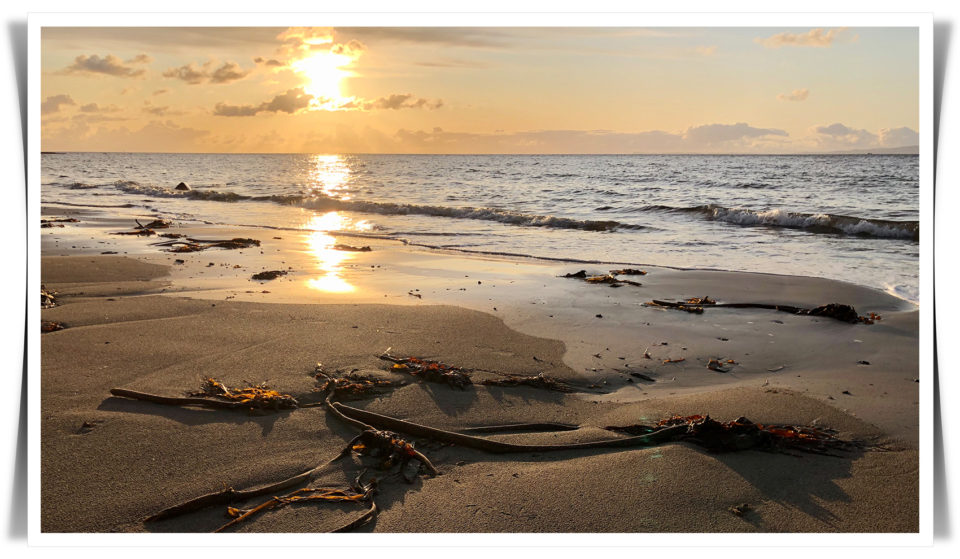
Everyone in my house is fed up. Everything is thoroughly damp. The roses have lost their leaves, and their buds are turning brown and falling off. Yes, even they have given up. My tomato plants are pathetic, and my peppers have gone on strike. The beach is full of rotting seaweed, coughed up by the ocean in an unseasonably late manner, and the sand on the southern part of it has turned green. There are algae-filled ponds forming on its surface.

This is not a day for walking; tomorrow will not be a day for walking, either. Instead, I think it’s a day for writing — and I’m going to begin by explaining why I haven’t written here for more than three years.

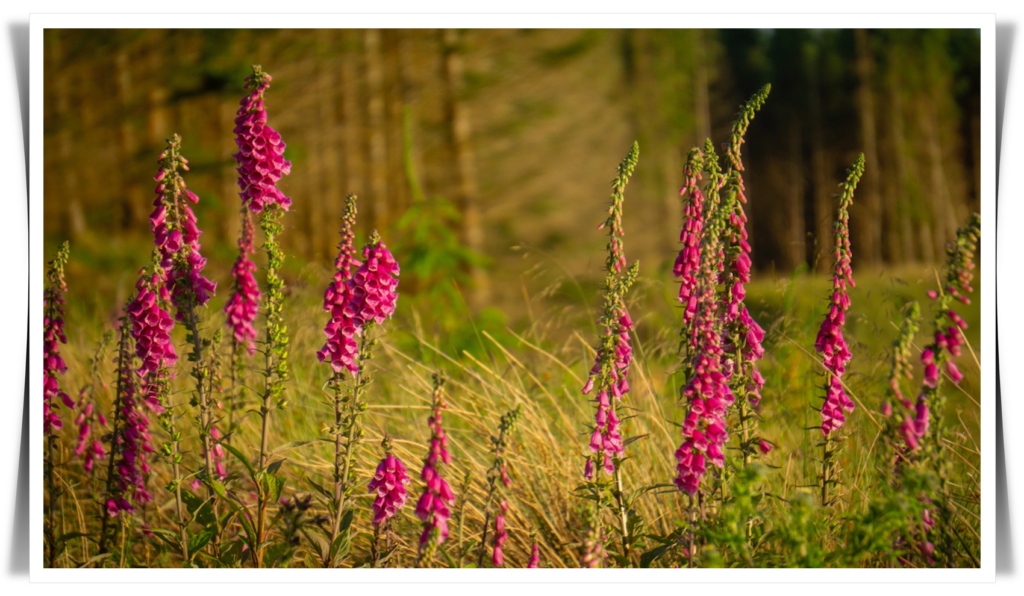
Foxgloves in a meadow at sundown.

Jeanne, where have you been?

In autumn 2022, something happened that left me feeling low, and while I tried to keep writing for a while, my heart wasn’t in it. At first, I couldn’t explain what had happened because it seemed so complicated and surreal. Instead, I lit a tea light each evening — a little flame in the darkness.

By the following spring, it became obvious that I needed some support, but my attempts to arrange it didn’t work out as I’d hoped. Then, that summer, I got made redundant.

I’m a creative person — painting, photography, music, writing — but when you’re going through a difficult period, it’s hard to create anything. You can try: you can start things, but finishing them is another matter

Recovery took longer than I expected. Gradually, I began to find my feet again, rediscovering things I’d forgotten about myself. While in London for work, I’d walk through the city in the evening, exploring various parks and paths along the river. I bought solo tickets to concerts and shows. Back at home, I roamed the hills near the village and took photographs again.

But still, I didn’t write here, and didn’t really talk to anyone about what had happened. I stuck to familiar subjects and spent a lot of time thinking, finding it difficult to put my own experiences into words.

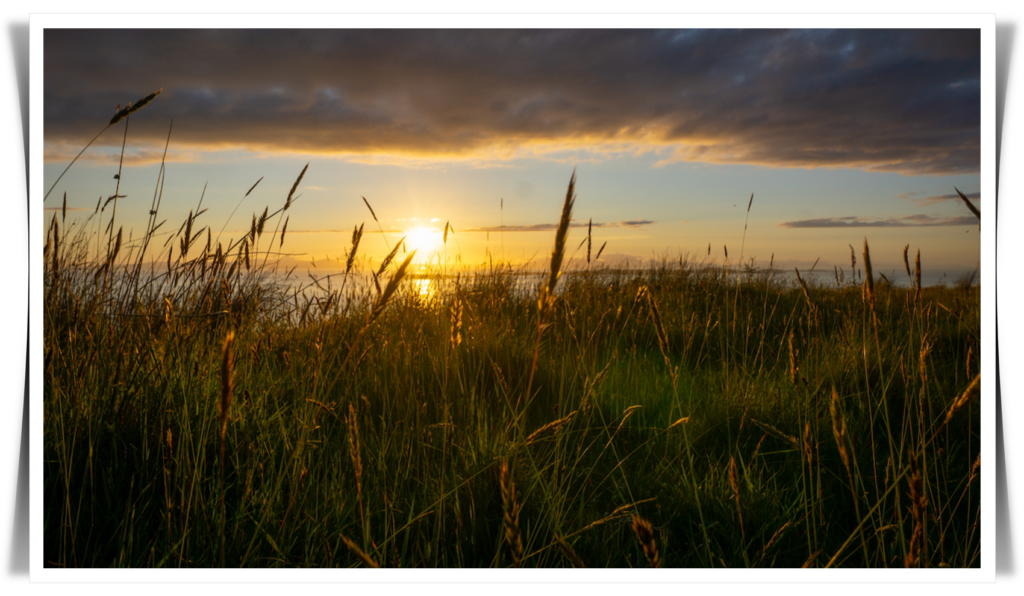
Grasses backlit by sunlight in late evening. Beyond the meadow, you can see a thin sliver of ocean, an island on the horizon, and the sun, low in the sky.

Then, in March 2025, I decided to apply for an archaeology degree, using my work experience and general enthusiasm for the subject as the basis for my application. To my surprise, the university sent an email about a week later to say I’d been granted a place in the programme. I began my studies in late August — about 20 years late, but there you go. Time flies.

Looking back, this was probably the turning point for me. Beyond being a mum (which has been the most profoundly positive thing ever to happen to me), re-entering higher education gave me a new sense of purpose and belonging. 

This year, I’ve become braver. I’m much better. Pieces of my life are shifting, like ice floes on a lake. I still light a candle every evening, but it’s more of a ritual now than anything else. 

And I’ve decided to write again — honestly and openly. Not everyone will be interested in the way I see the world, and that’s fine, but several people have said they’d like to read this blog. So, I’ll have at least four fans. 

What will you write about now?

Exploring, mostly, I suppose. People have lived continuously on this peninsula for thousands of years; the evidence is all around us — and not all of it is recorded. Kintyre is a bit of a frontier, which is exciting.

So, when the weather changes, I’ll hike up to a few spots I haven’t visited before. Until then, I’ll tell stories about places I’ve already been. They’re living in my head, and it’s time to let them out.

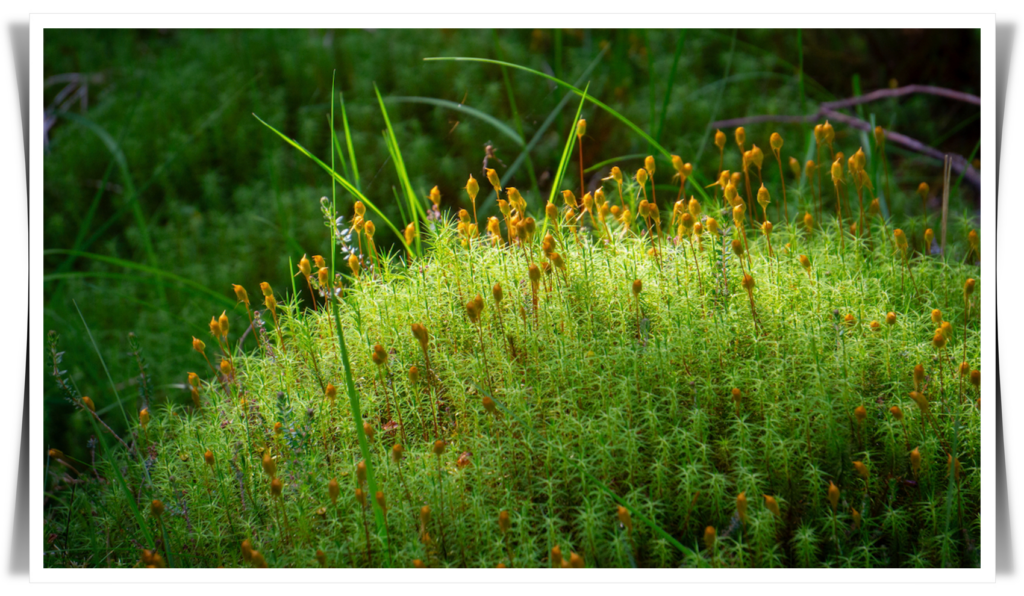
The top of a sunlit tuffet of haircap moss in the forest, with little blades of grass poking through it.

An appeal to the weather gods

An appeal to the weather gods

Dear Diary,

It’s been raining on and off for nearly a week. The sky has been relentlessly grey. We were supposed to get a bit of sunshine earlier, but it did not manifest as advertised; instead, ominous clouds hung over the house all day, bellyful of water.

I can bear it at first, weather like this — but after a time, my soul begins to drag around the edges. It’s as if I’m wearing a cape and small creatures from the underworld have emerged from the wet soil and are tugging it down, down. I feel the weight of them on my shoulders.

This evening, as if granted by some deity, a slim horizontal blue streak opened in the drab cover overhead — but only briefly. Soon enough, clouds riding the undercurrent covered it up again, putting an end to any optimism. 

I might begin blaming these things on the gods, actually. “The gods have forsaken me,” I could say. “They’ve brought me bad weather of all kinds. They have it in for me.”

Then a winged messenger could appear and say something like, “Wretched woman, what have you done to make the gods so angry with you?” And I would reply, “Oh, I have no idea, Hermes — probably everything.”

Probably everything.

After that, I’d have to soberly contemplate what I should do to placate these gods. Sacrifice three of my best oxen on the beach? I think not: that kind of thing is not in vogue these days.

No — no, I’ll have to make something instead. I’ll have to create something to delight them.

So, that is what I will do. Then maybe Poseidon will stop sending his squalls from the sea and we can feel sun on our backs again for at least a little while.

Yous affectionately,

Jeanne

It’s suddenly the end of May

It’s suddenly the end of May

I’ve done it again. After promising to write more often, I’ve neglected this poor blog for three straight months. Whoops.

Setting aside the reasons for my absence, it’s suddenly the end of May. This time of year is so beautiful – it’s no wonder this is the month people start arriving in camper vans, driving very slowly along the road so they can catch the view.

Hey, I get it. It’s gorgeous out here.

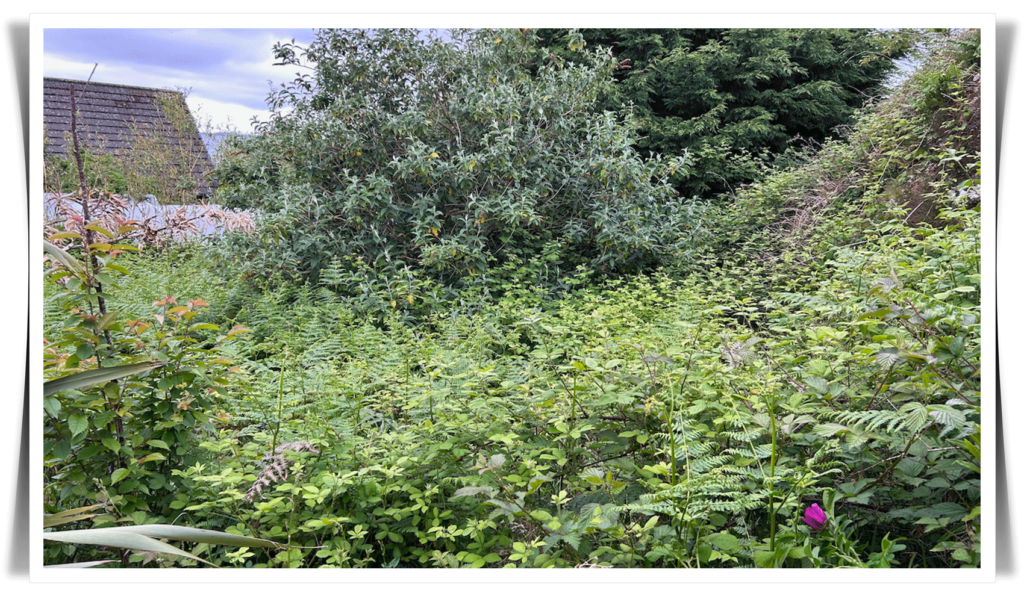
It’s prime gardening weather, too. I spent last weekend turning a bramble forest (literally) into a habitable patch of garden again. Previously hidden behind a fallen gate and an enormous New Zealand flax plant, it’s now accessible without a machete in hand.

Here’s a before photo.

I’d spent about two hours cutting through the giant flax plant’s leaves with a pair of shears – and if you’ve ever done that, you know how difficult it is. When I turned the corner and found myself face to fact with this, I have to admit I hesitated for a moment.

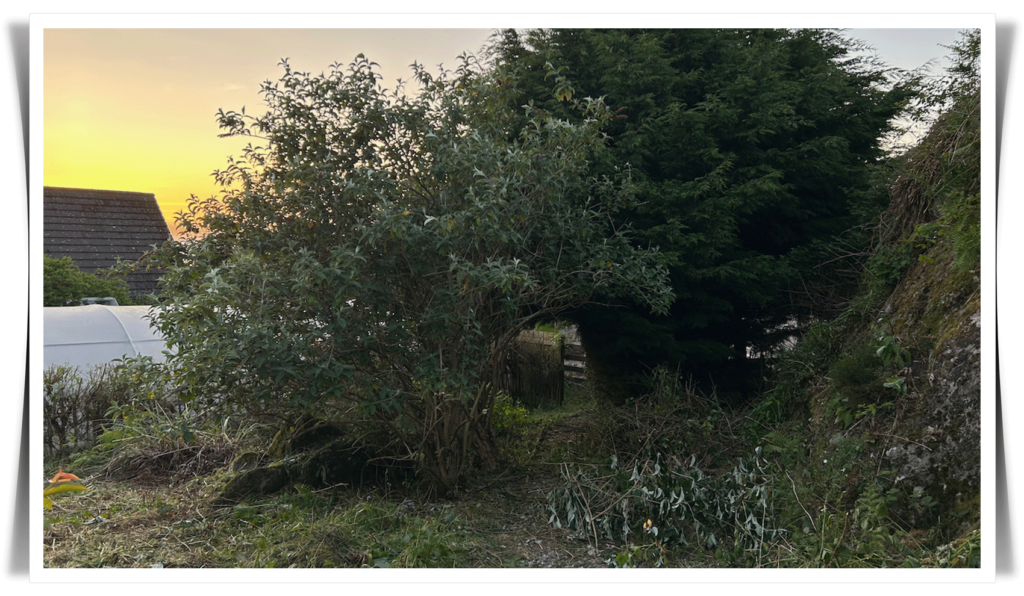
Then I broke out the electric hedge trimmer and began slashing my way through the brambles like Joan of Arc (incidentally my namesake). By the time I got to the butterfly bush, I began thinking, “Ah – this must be what it feels like to be a swordsman. I bet their shoulders hurt after a battle, too.”

In total, it took me three days to shear the entire area (carefully avoiding bluebells as I went along) and coppice the willow hedge enclosing two sides of the area.

Here’s what it looks like now.

There’s the polytunnel on the left: beloved by some and hated by others. It’s been a great place to grow plants that don’t appreciate the changeable Scottish weather or need extra heat. At the moment, it’s filled with flowering sage, onions, accidental romaine lettuce (I let a plant go to seed last year, and now its babies carpet the gravel between the raised beds), potatoes, strawberries, spinach, random calendula and various types of pepper, including the infamous Dorset Naga. That’ll blow the top of your head off.

I digress.

There’s still work to do up in the “secret garden” – I’ve exposed several metres of cliff face on the right there, and now have summit fever and want to tear the canes off the rest of it. More fool me, as I react badly to bramble scratches and thorns. Clearly I’m a glutton for punishment.

This project hasn’t been the only one I’ve plowed through recently. A couple of weeks ago, I turned our pond area from this…

…into this.

The five or six canna lilies I’ve had languishing in the greenhouse for a couple of years now have a new home on the edge of the water. I’m not sure how they’ll cope with limited hours of light, but they’ll love the boggy soil.

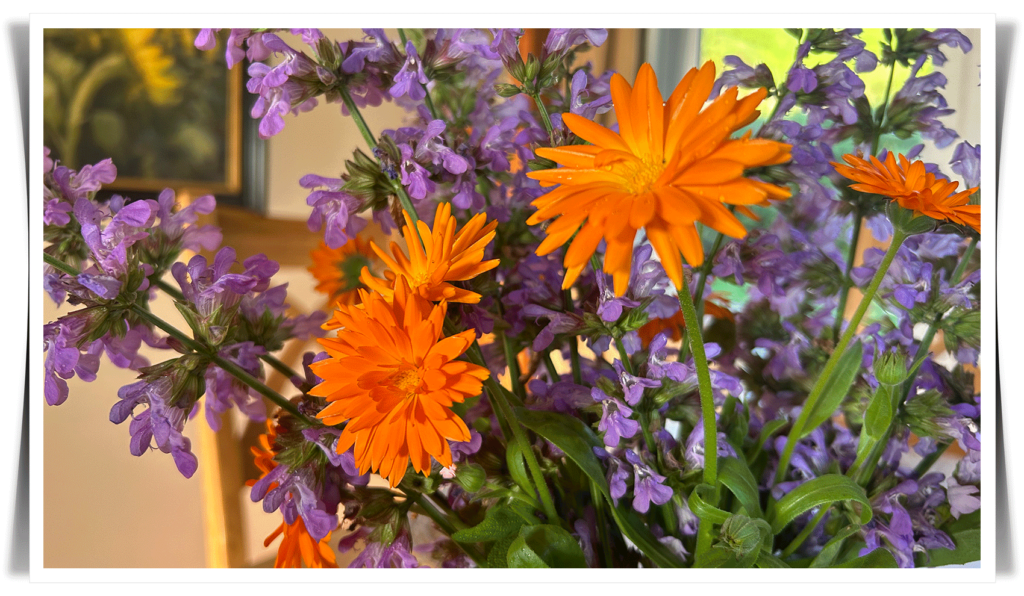
That’s it for now. I’ll leave you with a photo of what neglected sage and self-sown calendula look like in a vase. Rather pretty, actually.

Sunshine

Sunshine

You know the feeling when a headache suddenly clears? Everything seems better and brighter from one moment to another.

Well, that’s what happened when Camille and I went up to Dunan Muasdale (colloquially known as Muasdale Dun) for the first time this year. Described by Canmore as an “almost circular dun measuring 13.5m by 12m internally”, this old lookout spot sits on top of a rocky hill about a mile from the ocean.

Whenever I walk up the road toward the peninsula’s interior, I think, “What must it have been like to carry fish up from the sea to feed the people who kept watch in this thing?” At one point, the four-metre-thick walls were much taller. There’s probably been some type of structure there since prehistoric times – it’s such an obvious spot for a dun.

But nobody knows. Well, officially. Out here, there are still many things to discover and many structures yet to record.

Trudge up the road a couple more miles and you’ll walk straight into the clear remains of a prehistoric village, with multiple hut circles, a mound and a cist. Several thousand years ago, babies were born there and brought out to see the sun set over Islay. There were wolves and lynx living in the old-growth forest, and native wild boar on the menu for supper.

You won’t find that place marked on an Ordnance Survey map – not yet. It’s there, though.

It feels grounding to walk the same routes as our ancestors. The soil here is rich; excellent for crops. Neolithic farmers knew that when they began rolling the biggest boulders onto the edges of the ancient fields they dug. Humans know where best to settle.

I’ll show you around when it gets warmer and brighter. We’ll go to the half-built mansion house, now mostly fallen away. Then, we’ll take the winding route up to what we call “Heart Rock” – a wide, flat stone by the roadway, covered in cup marks – before visiting an ancient settlement nestling in forestry land at the top of the hill. Finally, we’ll hike back down into the woods and explore Achaglass, with its cottages, sheep pens and illegal whisky still (well, what’s left of it) embedded in the rocky burnside.

For now, here’s a glimmering view from the top of the dun. Isn’t it beautiful?

Dreaming of spring

Dreaming of spring

The weather hasn’t been friendly today. In fact, it’s “blowing a hooley”, and has been for most of the afternoon, with sustained gale-force winds and 70mph gusts. The storm isn’t supposed to die down until midnight.

I can feel the heavy weight of winter on my shoulders. I haven’t walked the loop in five days. Thankfully, tomorrow’s forecast looks much better – especially in the morning.

Camille’s been waiting a whole week to walk with me, so I’ll brew coffee, drink a cup and then head up the hill with her in tow. We’ll hike as far as we can before the mud stops us: past the burn, along the winding track toward the first abandoned farm. Then we’ll turn back, head down the road to the beach and hunt for sea glass, shells and other ocean treasures thrown up by the westerly.

It won’t be long until signs of spring begin to appear. First, we’ll see snowdrops, then Solomon’s Seal, wild narcissus and tiny yellow primroses. Soon, the sea stacks will shimmer with bluebells, and there’ll be a purple haze on the hill behind the house again.

But not yet. Not quite yet.

Rain

Rain

It’s relentlessly wet. After two days of relatively decent weather, we’re back to endless wind and rain.

Even the sheep seem a bit pissed off – and sheep are not easily vexed. The last time I walked “the loop” on Sunday (a circa 2.5-mile hike into the peninsula, emerging at the south end of the village), I ran into a group of sodden ewes. Our eyes met as I passed.

“Ba-a-a-ah,” I said.

“Is it nearly spring yet?” they all replied, wordlessly.

This close to the sea, the air is damp in any season. The rubber seals at the bottom of my car windows provide a habitat for long-stemmed moss, even in summer, which I find fascinating (and perhaps a little disconcerting).

But January takes precipitation to another level. Farm and forestry roads turn into temporary rivers and wash away underfoot, and one by one, hillsides develop deep, brown wounds as layers of grass slide away.

There’s usually a break between storms, but not this week. High winds and sleet every single day for the foreseeable future.

Ah – hear that? It’s hailing again. Goodness me.

Only 69 more days until the next equinox.

It’s been years…

It’s been years…

…hasn’t it?

I had planned to write about gardening, puffins and the island just three miles out across the water, but then the pandemic struck, and everything changed overnight.

Then I thought, “Hey, I’ll write about living through the pandemic out here.” But I didn’t.

Maybe navigating through the crisis took up all my mental energy; maybe I just took on too many freelance writing jobs. I can’t remember now.

Anyway, I’m back.

“So,” I hear you ask, “what prompted this reemergence? Why now?”

In short, because everything has changed. I’m still here, out on the edge of the world, but almost everything else is different. The best way to describe it is an awakening: I’ve woken up after a long period of dormancy.

For the first time, I feel both alone and capable. Those two feelings would have been incompatible with one another when I was younger. If I felt alone, I’d also feel somewhat lost. Now, I know I can navigate. As the popular meme saying goes (approximately) my track record of survival thus far is 100%. The evidence is irrefutable: I get through stuff.

I’m doing things I haven’t done in years. Painting, for example, and drawing. My old art teacher, Mr Gaskin, would probably be pleased with me — pleased to hear I’d retained the will to create. If I could find him, I’d tell him, but I have no idea where he is now.

It’s been so long.

Oh — sorry — you meant, “What led to you writing this post now?” I went a bit too deep there, didn’t I.

Well, this evening, I came across a folder of old music in an ancient hard disc backup. I used to own most of it on CD and would listen to it while walking miles between jobs each day at the beginning of the millennium.

I burned the candle at both ends in those days, and everywhere I went, I wore earbuds. Music ran through almost every moment of my life.

The music I found flipped a light switch in part of my brain. All of a sudden, there I was, standing inside this large, vital room I’d forgotten in my mind. Dusty objects, books, papers, half-finished creative endeavours were all over the place.

“Shit. How could I have forgotten about this place?”

I’d walked out of there years ago, maybe just to make a cup of tea, and hadn’t returned. Nobody had been in there since. But nothing was missing. Everything was as it had been.

Hello, me. How’ve you been?

So, I’m back. I am unearthed again. It’s an interesting feeling.

You’ll see me much more frequently from now on.

Kintyre at First Sight

Kintyre at First Sight

Even now, I struggle to describe just how beautiful Kintyre is – especially in summer. Life bursts out of every part of the landscape. Colours seem richer and deeper here than they are anywhere else I’ve ever been.

Let’s go on a journey from Ayrshire to Largieside.

You begin by driving northeast on the undulating A737 over shallow hills, past cows and sheep and old farms and wind turbines, through the little town of Dalry and into bustling Linwood. There, you join the M8 and get lost in traffic for a while before merging onto the A898 and passing over the swollen Clyde on the Erskine Bridge. Glasgow is a busy place, isn’t it.

After you leave the city, the route gets simpler. You turn onto the A82 and travel northwest, through Dumbarton and into Loch Lomond territory. All of a sudden, things seem much prettier. A long, blue lake cascades along to your right, sun pouring warm light over the mountains on its easterly side.

You pass the turnoff for Luss and continue on past Inverbeg and Stuckgowan before turning left onto the smaller A83. There, the road winds down into the little village of Tarbet (“narrow isthmus”), which sits at the bottom of a low valley between Loch Lomond and Loch Long. Roughly 750 years ago, a band of charming Viking raiders pulled their longships out of the sea at Arrochar on Loch Long and dragged them a mile and a half to Tarbet so that they could raid settlements along Loch Lomond.

Arrochar and Tarbet together represent something of a border between public transport options in Argyll and Bute and those in the rest of Scotland. People travelling by train have to disembark at Arrochar and hitch a ride on the 926 coach if they want to keep going. The railway runs no further west: you’re heading into the wild.

Anyway, you continue on past Succoth, rounding the head of the loch. The trees on the edge of the road are sparse and through them, you can see an expanse of gentle water and beyond that, a steep vista against the sky. Later, at Ardgartan, the road begins to wind again, curving through dark woodland and out into sunshine. Land falls away on the left and stretches up on the right as you travel further and further into the mountains.

If you look down, you can trace the path of a burn twisting across the valley floor. Sprawling evergreen forests roll like giant rugs over the landscape, while yellow-blooming heathers, punctuated with ferns, tumble down steep slopes. Every now and again, you see a long waterfall in the distance.

The road keeps ascending. Buzzards ride updrafts and hang in the air, while smaller birds flock across the valley. If you want a better look at the Old Military Road meandering through Glen Croe, you can swing into the car park at the famous Rest and Be Thankful. Ahead, Loch Restil cuts a thin trough through the pass.

Next, you drive past Cairndow and on to Loch Fyne, where the asphalt curves around the edge of sparkling water. A while later, you’ll cross a humpbacked bridge and see Inveraray Castle on your right before heading into the town itself.

Occasionally, the big sea loch disappears and you bumble through arable land, but you always meet the inlet again eventually. You’ll pass through Lochgilphead and over the narrow metal Crinan Canal swing-bridge at Ardrishaig, continuing on past Inverneill and Erines and the salmon farm just offshore.

Finally, you descend into Tarbert, where the main street bends around the harbour. Several cafes, a couple of pubs, gift shops, art galleries, a small supermarket, an ironmonger shop, a butcher and a newsagent face the water in a semicircle. Fishing boats enter and leave the sheltered port via a narrow bottleneck several hundred metres away.

Up and out you go, past the parish church and the village hall. You continue along the edge of Loch Tarbert, past the Kennacraig terminal with its big Islay car ferry docked and ready for departure, and on through Whitehouse and Clachan.

Then, suddenly at the top of a blind summit, the overhanging trees give way to a broad landscape and you see the sound of Gigha for the first time, water glimmering blue and green in the sunlight. Jura sits on the horizon, its iconic paps on the skyline. According to local legend, Kintyre’s ancient inhabitants considered the island a mother goddess and erected standing stones on the peninsula to worship her.

As you drive south, Jura’s matriarchal peaks slide behind the northern tip of Gigha. You zip past boulder-strewn croft land covered in tough scrub grass and reeds, and on the shore side, sheep and cows of all colours graze in flat fields next to the ocean.

There are flowers everywhere in spring and summer. Rhododendrons bloom along the roadside, while yellow rock roses, daisies, red clover and purple vetch spill out of ditches and meadows and gaps in stone walls. Shades of green are incredibly chromatic.

Deserted beaches of pale sand, abandoned stone cottages, old roofless churches enclosed in ivy, clifftop farmhouses and trees covered in thick moss fly by. Seagulls congregate and follow moving tractor plows; robins chase sparrows in and out of bushes at the side of the trail.

If you pull over at Muasdale and walk down to the beach, you’ll see a gigantic weather-worn boulder in the sand. Lemon-coloured marsh marigolds and buttercups, pink vicia, herb robert and bramble flowers spring over the beach border. It’s gorgeous.

And that’s where we’ll stop, because that’s home. That’s where all our adventures begin.

Where would you live, if you could live anywhere?

Where would you live, if you could live anywhere?

Back in November 2017, I sent my dad a message.

“Where would you live if you could live anywhere?” I asked.

“Kintyre,” he replied, “Nobody ever thinks of Kintyre.”

Now, every morning when I wake up and look out of the window, I see the ocean, which is never the same twice. Sometimes, sea mist rolls in and settles on our little village, obscuring the view. On clear days, I can see the island of Cara three miles out, its craggy mull facing south. People say that Cara has a brownie living on it – but that’s for another post.

Gigha lies a bit further north, with its secluded gardens, art gallery, post office and wind farm. If you wander down to the beach not far away, you can watch the little ro-ro ferry bobbing its way back and forth between Tayinloan and Ardminish. When the sea gets rough, Gigha’s inhabitants are left trapped on their six-mile-long island, reduced to a hopeful line of twinkling lights in the darkness of night.

Sometimes the ocean in front of me sits calm as a pane of glass, reflecting the sky like a mirror. When the wind kicks up, things get choppier and early on bright summer mornings, joyful little sailboats appear not far off shore. When the westerly gales roll in over the winter, the water turns a deep shade of green and covers the sand completely.

So, here we are, living out on the edge of the world. And it’s beautiful.